

Cuyabeno Travel Guide for First-Time Visitors
How to get to Cuyabeno ? – The Cuyabeno Wildlife Reserve is one of Ecuador’s most spectacular natural destinations and one of the best places in South America to experience the Amazon rainforest. Covering more than 600,000 hectares of protected tropical forest, rivers, lagoons, and wetlands, Cuyabeno is home to an incredible variety of wildlife, including Pink River Dolphins, anacondas, monkeys, caimans, giant otters, and more than 550 species of birds.
Despite its popularity among nature lovers and adventure travelers, many visitors are unsure how to actually get there. Unlike destinations such as Quito, Baños, or the Galápagos Islands, reaching Cuyabeno requires multiple stages of transportation and some advance planning.
The good news is that getting to Cuyabeno is much easier than most travelers expect. Whether you are traveling from Quito, Guayaquil, Baños, or elsewhere in Ecuador, there are several transportation options available depending on your budget, schedule, and travel style.
This guide explains everything you need to know about getting to Cuyabeno, including transportation routes, travel times, costs, and practical tips to help you enjoy a smooth journey into the Ecuadorian Amazon.
Where Is Cuyabeno Located?
The Cuyabeno Wildlife Reserve is located in northeastern Ecuador, in the province of Sucumbíos, close to the Colombian border. It lies within the Amazon Basin and is considered one of the most biodiverse regions on the planet.
Unlike many national parks that can be accessed directly by road, Cuyabeno is only partially accessible by land. Travelers must first reach the city of Lago Agrio, continue by road to the Cuyabeno Bridge, and then travel by motorized canoe through the rainforest to reach their lodge.
This combination of road and river transportation is part of what makes the experience so unique. The adventure begins long before you arrive at your lodge.
Understanding the Route to Cuyabeno
Almost every traveler follows the same basic route:
Quito → Lago Agrio → Cuyabeno Bridge → Canoe Transfer → Lodge
While there are different ways to reach Lago Agrio, every visitor eventually arrives at the Cuyabeno Bridge, which serves as the official entrance point to the reserve.
Once there, visitors board motorized canoes operated by their lodge or tour company and travel deeper into the rainforest.
The entire journey can take anywhere from 8 to 14 hours depending on your starting location and transportation choices.
How to Get to Cuyabeno from Quito
Quito is the most common departure point for travelers visiting Cuyabeno. Since most international visitors arrive through Quito’s airport, transportation infrastructure is well established and there are several ways to reach the reserve.
Option 1: Tourist Shuttle
The easiest and most popular option is to book transportation directly through your lodge or tour operator.
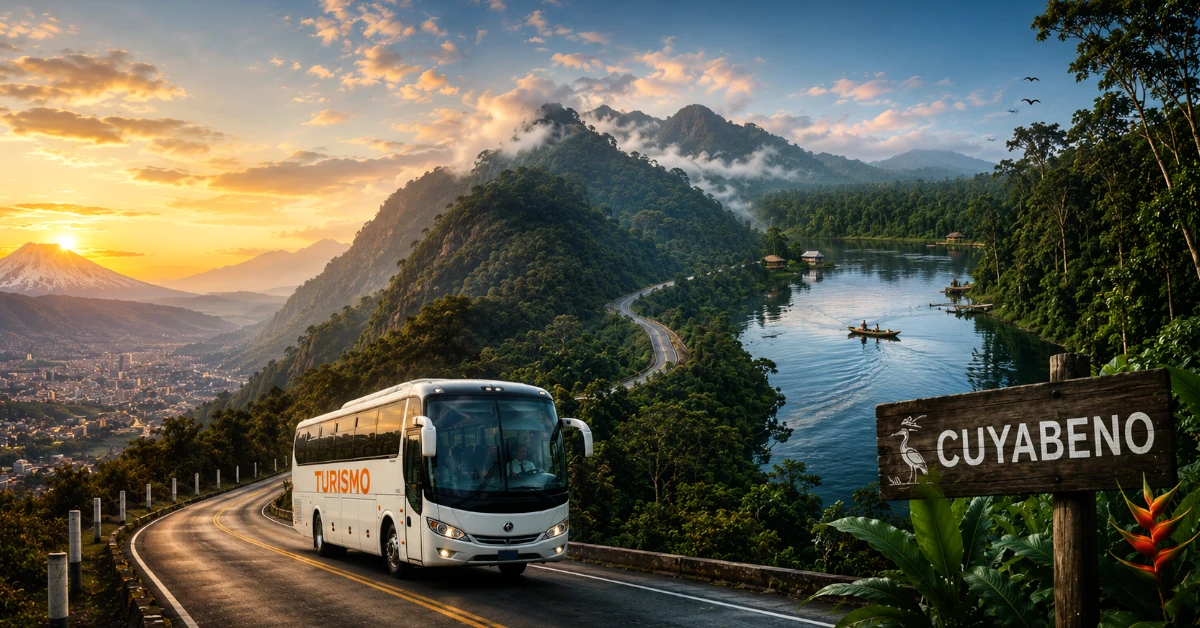
Many Cuyabeno lodges offer overnight tourist buses or private transportation from Quito. These services are specifically designed to coordinate with tour schedules and are often the most convenient choice for international travelers.
Most tourist buses depart Quito late in the evening and arrive near the Cuyabeno entrance early the next morning.
Advantages include:
- Direct transportation
- Coordination with tour schedules
- Comfortable travel
- Reduced planning stress
- Ideal for first-time visitors
Because the transportation is organized specifically for travelers heading to Cuyabeno, this is often considered the simplest option.
Option 2: Public Bus
Budget-conscious travelers often choose public buses from Quito to Lago Agrio.
Several bus companies operate daily routes between the capital and Lago Agrio. The journey typically takes between eight and ten hours, depending on road conditions and traffic.
Most buses depart from Quito’s main terminal and travel overnight, allowing travelers to arrive in Lago Agrio the following morning.
Public buses are significantly cheaper than flights and private transportation, making them popular among backpackers and long-term travelers.
However, travelers should always verify schedules in advance, especially during holidays or peak travel seasons.
Option 3: Flight to Lago Agrio
For travelers with limited time, flying is the fastest way to reach the Amazon region.
Domestic flights from Quito to Lago Agrio take approximately 40 minutes. Upon arrival, travelers continue by road to the Cuyabeno Bridge before boarding the canoe transfer.
Although flights are more expensive than bus transportation, they dramatically reduce travel time and allow visitors to maximize their time in the rainforest.
This option is particularly attractive for travelers visiting Ecuador on shorter itineraries.
How to Get from Lago Agrio to Cuyabeno
Lago Agrio, officially known as Nueva Loja, serves as the primary gateway to Cuyabeno Wildlife Reserve.
Whether you arrive by bus, plane, or private vehicle, Lago Agrio is where the final stage of your journey begins.
Most lodges arrange transportation from Lago Agrio to the Cuyabeno Bridge. Travelers typically meet guides at designated hotels, offices, or meeting points before departing for the reserve.
The drive from Lago Agrio to the bridge takes approximately two to three hours.
Along the way, the scenery gradually changes from urban areas to dense Amazon rainforest, giving travelers their first glimpse of the incredible environment awaiting them.
The Canoe Journey into the Amazon
For many visitors, the canoe ride from the Cuyabeno Bridge to their lodge becomes one of the most memorable parts of the entire experience.
After arriving at the bridge, travelers transfer into motorized canoes and begin navigating the rivers and waterways that connect different areas of the reserve.
Depending on water levels and lodge location, the canoe journey can last between two and three hours.
Wildlife sightings frequently begin during this transfer. It is not uncommon to see monkeys, exotic birds, river turtles, caimans, and even pink river dolphins before arriving at your lodge.
Unlike many destinations where transportation is simply a means of reaching a final destination, the canoe transfer is an integral part of the Amazon experience.
How to Get to Cuyabeno from Guayaquil
Travelers starting in Guayaquil have several transportation options.
The fastest route generally involves flying or traveling to Quito first and then continuing to Lago Agrio.
Another possibility is traveling by long-distance bus through Quito before connecting to transportation heading toward the Amazon region.
Because Guayaquil is located on Ecuador’s Pacific coast, the total journey is considerably longer than from Quito.
Many travelers choose to spend a night in Quito before continuing to Cuyabeno to break up the trip and simplify logistics.
Private transportation is also available for groups seeking greater flexibility and comfort.
How to Get to Cuyabeno from Baños
Baños is one of Ecuador’s most popular adventure destinations, and many travelers visit Cuyabeno after exploring the Andes.
The most straightforward option is usually returning to Quito and continuing toward Lago Agrio.
Some travelers may also connect through Amazonian cities such as Tena or Coca, depending on transportation schedules and tour arrangements.
Because transportation options vary throughout the year, travelers should coordinate with their chosen lodge before finalizing travel plans.
Many operators can recommend the most efficient route based on your location and arrival date.
Can You Drive Yourself to Cuyabeno?
Yes, it is possible to drive your own vehicle to the reserve entrance.
The route from Quito to Lago Agrio is paved and generally accessible year-round, although weather conditions can occasionally affect travel times.
Travelers who choose to drive should arrive in the area at least one day before their tour departure whenever possible.
Most lodges can provide information regarding parking availability and security arrangements.
However, it is important to understand that independent travel ends at the Cuyabeno Bridge.
Access beyond this point is only possible by canoe, and transportation is coordinated through authorized tour operators and lodges.
How Long Does It Take to Get to Cuyabeno?
Travel times vary depending on transportation choices.
Typical travel durations include:
- Quito to Lago Agrio by bus: 8 to 10 hours
- Quito to Lago Agrio by plane: 40 minutes
- Lago Agrio to Cuyabeno Bridge: 2 to 3 hours
- Canoe transfer to lodge: 2 to 3 hours
For most travelers departing from Quito, the total journey ranges between 10 and 14 hours.
While this may seem lengthy, the remote location is one of the reasons Cuyabeno remains such a pristine and rewarding destination.
What Is the Best Way to Get to Cuyabeno?
The best option depends on your priorities.
Best for Budget Travelers
Public buses offer the lowest transportation costs and are widely used by backpackers.
Best for Convenience
Tourist shuttles arranged through lodges provide a stress-free experience and simplify logistics.
Best for Saving Time
Flights to Lago Agrio significantly reduce travel time and allow visitors to spend more time exploring the rainforest.
Best for Families and Small Groups
Private transportation offers flexibility, comfort, and personalized scheduling.
Regardless of which option you choose, every route eventually leads to the same unforgettable destination: the heart of the Ecuadorian Amazon.
Essential Travel Tips
Before traveling to Cuyabeno, keep these practical recommendations in mind:
Book transportation in advance during peak travel seasons.
Carry your passport and travel documents at all times.
Pack lightweight clothing suitable for hot and humid conditions.
Bring waterproof bags to protect electronics and valuables.
Use insect repellent and sunscreen daily.
Keep a reusable water bottle with you during the journey.
Confirm all transportation schedules with your lodge before departure.
Arriving one day early in Lago Agrio can provide additional flexibility and reduce the risk of missing your tour departure.
Frequently Asked Questions
Can I Visit Cuyabeno Without a Tour?
Most visitors travel with organized tours because transportation, lodging, guides, and canoe transfers are coordinated through authorized operators.
Is Lago Agrio the Entrance to Cuyabeno?
Lago Agrio is the main gateway city. The actual entrance to the reserve is located at the Cuyabeno Bridge.
Do I Need to Stay Overnight in Lago Agrio?
Not necessarily. Many travelers arrive on the same day as their tour departure. However, staying overnight can make logistics easier and reduce travel stress.
Is Cuyabeno Safe for Tourists?
Yes. Cuyabeno is considered a safe destination when traveling with reputable operators and following guide instructions.
What Is the Best Time to Visit Cuyabeno?
Cuyabeno can be visited year-round. Water levels and wildlife viewing opportunities vary throughout the year, offering unique experiences in every season.
Final Thoughts
Reaching Cuyabeno may require more planning than visiting other destinations in Ecuador, but the reward is well worth the effort.
The journey itself becomes part of the adventure as travelers move from the Andes to the Amazon, passing through remote landscapes before entering one of the most biologically diverse ecosystems on Earth.
Whether you choose a bus, flight, private shuttle, or self-drive route, the experience ultimately leads to an unforgettable exploration of Ecuador’s rainforest.
For nature lovers, wildlife enthusiasts, photographers, and adventure travelers, Cuyabeno is not simply another destination—it is one of the most extraordinary places in South America.
Once your canoe leaves the Cuyabeno Bridge and disappears into the rainforest, you’ll understand why so many travelers consider this one of the highlights of their entire trip to Ecuador.

Comment (0)