

The Ultimate Guide to Ecuador’s Amazon Bird Paradise
For bird lovers, few destinations in South America compare to Birdwatching in Cuyabeno. Located in the Ecuadorian Amazon, the Cuyabeno Wildlife Reserve is one of the country’s most biodiverse protected areas and a paradise for birdwatchers, photographers, and nature enthusiasts.
With hundreds of recorded bird species living among rivers, lagoons, flooded forests, and primary rainforest, every excursion offers new opportunities to observe colorful and fascinating wildlife.
Whether you’re an experienced birder or simply enjoy watching wildlife in its natural habitat, Cuyabeno provides an unforgettable birdwatching experience.
Why Is Cuyabeno One of Ecuador’s Best Birdwatching Destinations?
The Cuyabeno Wildlife Reserve protects nearly 590,000 hectares of Amazon rainforest, wetlands, and blackwater ecosystems.
Its remarkable variety of habitats supports an exceptional diversity of birdlife. Scientists have recorded more than 580 bird species within the reserve, making it one of Ecuador’s premier birdwatching destinations.
From brilliantly colored macaws flying above the canopy to tiny hummingbirds feeding among rainforest flowers, every part of the forest offers unique opportunities for observation.
Birds You Can See in Cuyabeno
One of the highlights of birdwatching in Cuyabeno is the incredible variety of species that visitors may encounter.
Some of the most sought-after birds include:
Hoatzin
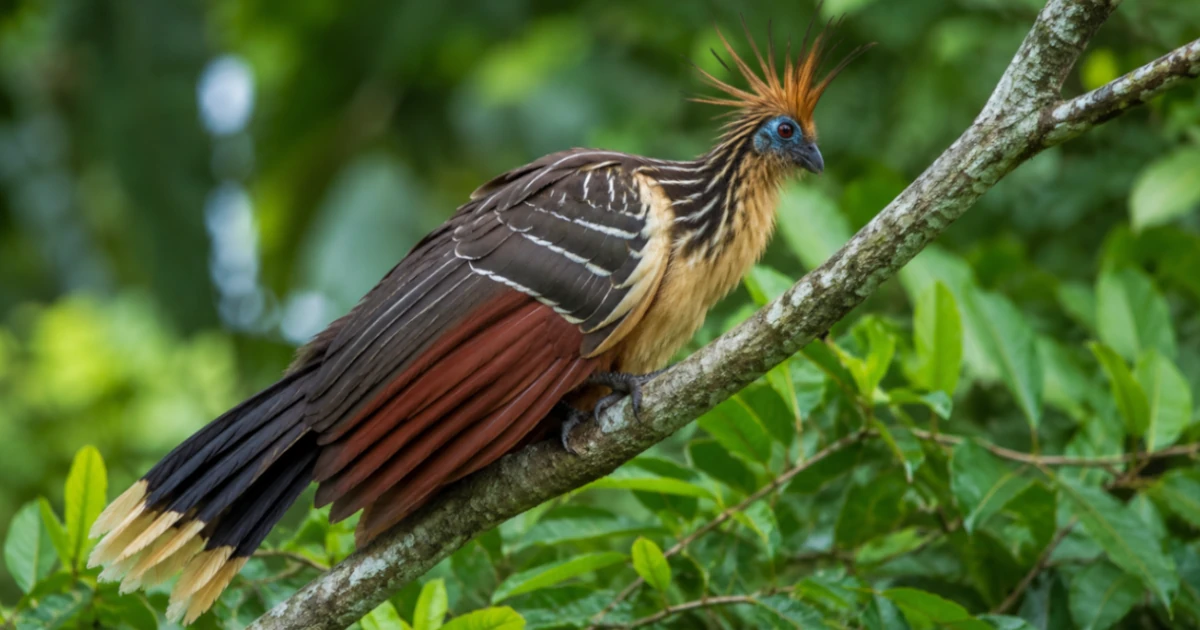
Often called the “living fossil,” the Hoatzin is one of the Amazon’s most unusual birds. Its prehistoric appearance, blue face, and distinctive crest make it one of the easiest species to recognize around Cuyabeno’s lagoons.
Scarlet Macaw
The Scarlet Macaw is one of the rainforest’s most colorful birds. These magnificent parrots often fly in pairs above the canopy while filling the forest with their unmistakable calls.
Blue-and-yellow Macaw
Another iconic Amazon species, the Blue-and-yellow Macaw is frequently seen near rivers and forest edges.
Toucans
Several species of toucans inhabit Cuyabeno, including the White-throated Toucan. Their oversized colorful bills make them among the reserve’s most photographed birds.
Kingfishers
The reserve is home to numerous kingfisher species that hunt fish from low branches overlooking rivers and lagoons.
Herons and Egrets
Along riverbanks and wetlands, visitors commonly observe herons, egrets, and other wading birds searching for fish and amphibians.
Birds of Prey
Keep an eye on the sky for hawks, kites, falcons, and occasionally magnificent harpy eagles in suitable habitat.
Hummingbirds
Dozens of hummingbird species inhabit the rainforest, adding flashes of brilliant color wherever flowering plants are found.
Best Places for Birdwatching in Cuyabeno
Different habitats attract different bird species, making every excursion unique.
Some of the best birdwatching locations include:
Laguna Grande
This famous blackwater lagoon offers excellent opportunities to observe Hoatzins, kingfishers, herons, cormorants, and macaws.
The Cuyabeno River
Early morning canoe trips along the river often produce sightings of parrots, toucans, raptors, and many forest-edge species.
Flooded Forests
During the high-water season, canoe excursions through flooded forests reveal birds that are difficult to observe elsewhere.
Primary Rainforest Trails
Guided hikes provide opportunities to spot understory birds, woodcreepers, antbirds, trogons, and other secretive species.
Best Time for Birdwatching in Cuyabeno
One of the advantages of birdwatching in Cuyabeno is that excellent birding is possible throughout the year.
Each season offers different opportunities.
During periods of lower rainfall, forest trails become easier to access, making hiking more comfortable.
When water levels rise, canoe routes expand into flooded forests where many aquatic and forest species become easier to observe.
Regardless of the season, birds are active every day, especially during the early morning and late afternoon.
Best Time of Day
Professional guides usually begin birdwatching excursions shortly after sunrise.
This is when many species are feeding, singing, and flying between trees.
Late afternoon is another excellent period, as birds become active again before sunset while temperatures begin to cool.
Why Bird with a Naturalist Guide?
Although birds are abundant throughout the reserve, many Amazon species are well camouflaged and difficult to locate without experience.
A knowledgeable naturalist guide can:
- Identify birds by sight and sound.
- Locate hidden species.
- Explain bird behavior.
- Share fascinating ecological information.
- Increase your chances of seeing rare species.
Even experienced birdwatchers benefit from local expertise in such a diverse rainforest.
Bird Photography Tips
Cuyabeno offers outstanding opportunities for wildlife photography.
For the best results:
- Bring a telephoto lens if possible.
- Use fast shutter speeds for birds in flight.
- Wear neutral-colored clothing.
- Move slowly and quietly.
- Protect your equipment with a waterproof bag.
- Carry extra batteries, as humidity can reduce battery life.
Patience is often rewarded with spectacular encounters.
More Wildlife Beyond Birds
Birdwatching excursions frequently include sightings of other Amazon wildlife.
Visitors may also encounter:
- Pink river dolphins
- Several monkey species
- Sloths
- Giant otters
- Caimans
- Anacondas
- Tree frogs
- Butterflies
This incredible biodiversity makes every outing an exciting wildlife experience.
Conservation Through Ecotourism
Responsible tourism plays an important role in protecting Cuyabeno’s extraordinary biodiversity.
By visiting the reserve with responsible tour operators, travelers help support conservation initiatives, scientific research, local employment, and Indigenous communities that have lived in the Amazon for generations.
Protecting habitats ensures that future generations will continue to enjoy one of the richest birdwatching destinations on Earth.
Final Thoughts
Whether you’re searching for colorful macaws, prehistoric-looking Hoatzins, elusive toucans, or rare Amazon forest birds, birdwatching in Cuyabeno offers an experience unlike anywhere else in Ecuador.
With more than 580 recorded bird species, breathtaking rainforest landscapes, expert naturalist guides, and opportunities to observe wildlife throughout the year, the Cuyabeno Wildlife Reserve remains one of South America’s finest birding destinations.
For anyone passionate about birds and nature, a journey into the Ecuadorian Amazon is sure to become one of the most memorable adventures of a lifetime.

Comment (0)